Posted in Naval & Aviation History, Ship Models

The ships of the Battle of Trafalgar: a complete guide to the navy

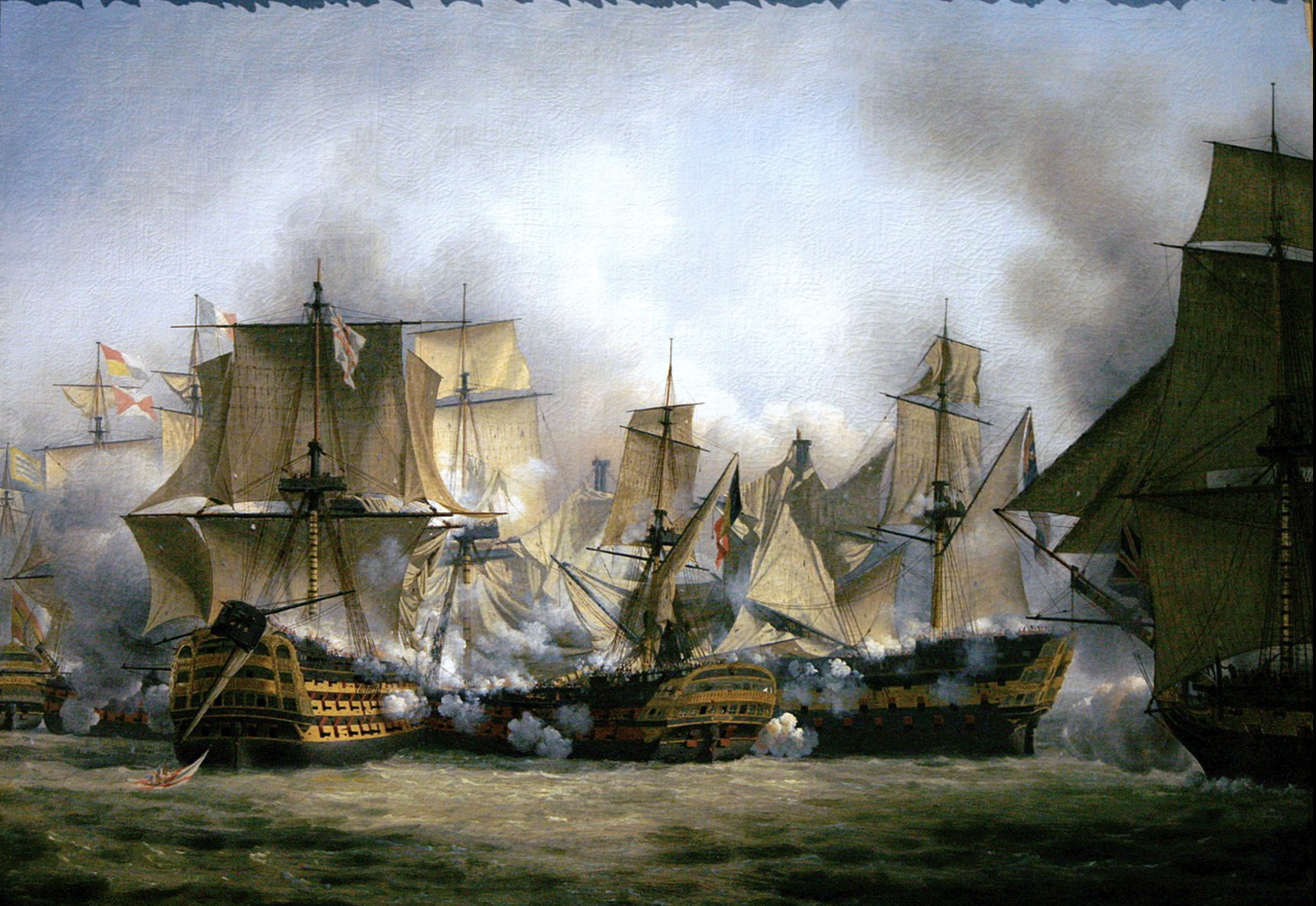
On October 21, 1805, off the coast of Cape Trafalgar, a naval battle took place that changed the course of European history. Imagine: 60 colossal wooden ships armed with cannons about to clash in an epic battle. The warships at Trafalgar represented the best of each nation: on one side, Nelson’s legendary Royal Navy Trafalgar; on the other, the allied French and Spanish armada.

The warships of Trafalgar numbered 60 vessels equipped with thousands of cannons. These famous Trafalgar ships carried sailors ready to fight to the end. Today, you can recreate these ships with the models in the Artesanía Latina catalog.

The British Navy: HMS Victory and the other ships

The British fleet at Trafalgar consisted of 27 ships under the command of Admiral Nelson. HMS Victory Trafalgar was the undisputed king.

Launched in 1765, this giant measured 69 meters and carried 104 cannons on three decks. With its 820 crew members, the Victory was a floating castle built with 6,000 oak trees. Its cannons fired 32-, 24-, and 12-pound projectiles. This ship still exists today: you can visit it in Portsmouth, where it is the oldest warship in the world still in service.
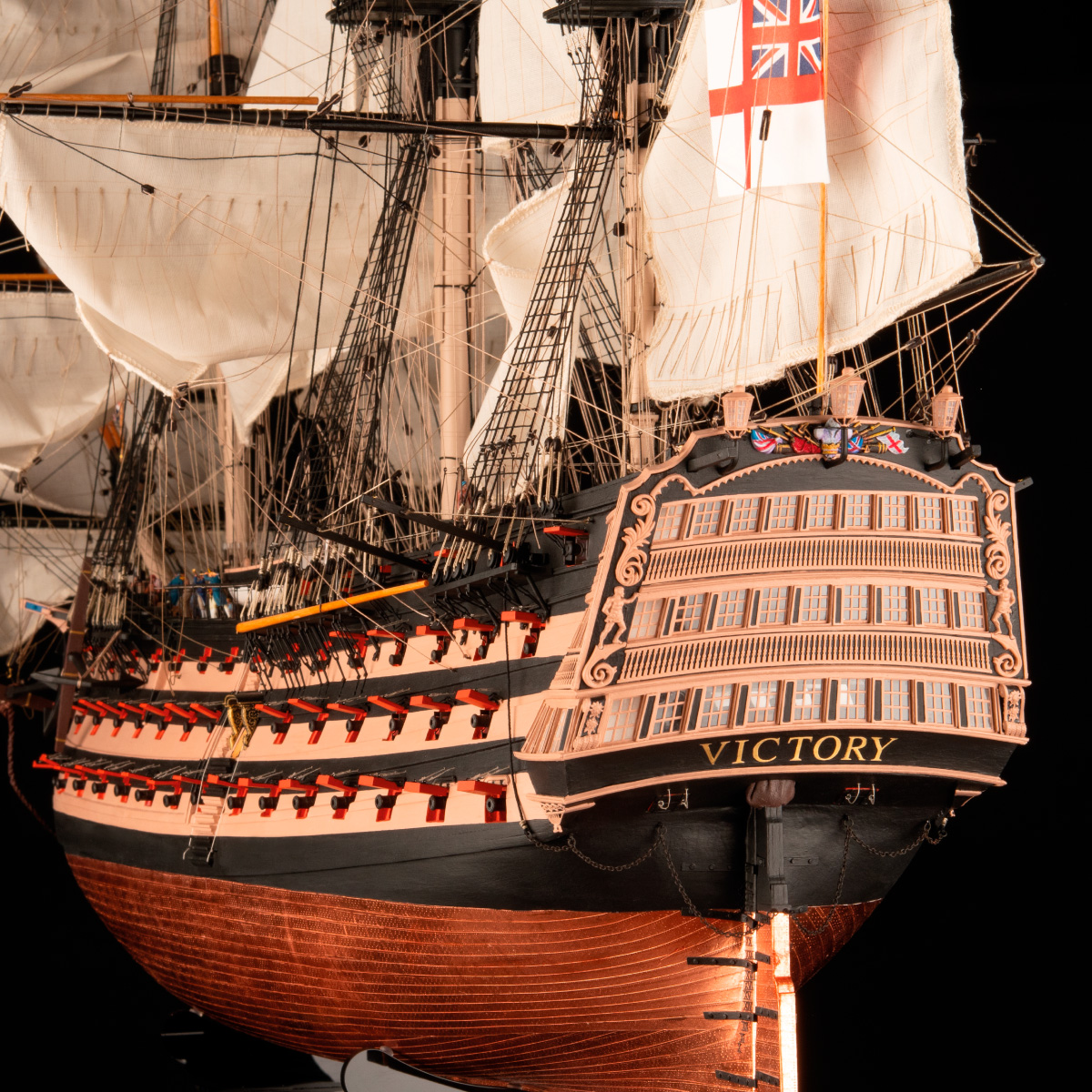
HMS Victory model ship – warship from the Battle of Trafalgar

HMS Victory technical specifications:

  • Length: 69.34 meters
  • Width: 15.80 meters
  • Displacement: 3,500 tons
  • Armament: 104 guns
  • Crew: 820 men
  • Speed: 8-9 knots

Alongside the Victory sailed HMS Royal Sovereign, equipped with 100 guns, which was the first to break through the enemy line, and HMS Temeraire (98 guns), which then rescued the Victory. Ships with 74 guns, such as the Belleisle, the Colossus, and the Ajax, formed the backbone: a perfect balance between power and maneuverability. This design became the standard for ships of the line at Trafalgar.

The Spanish Navy: the Santísima Trinidad and Spanish ships

The Spanish ships at Trafalgar represented centuries of tradition. The Spanish navy of 1805 had 15 ships, including the most impressive.

The Santísima Trinidad was unique: the largest ship in the world with four decks and 130 to 140 guns. Built in Havana in 1769, it measured 61 meters and displaced nearly 5,000 tons. Its crew of 1,050 men wielded a devastating arsenal. During the battle, it fought heroically against seven British ships that surrounded it until it was destroyed.

Santísima Trinidad technical specifications:

  • Length: 61.30 meters
  • Width: 16.20 meters
  • Displacement: 4,900 tons
  • Armament: 130-140 guns
  • Crew: 1,048 men
  • Speed: 7 knots

Other notable ships included the Santa Ana, armed with 112 guns, which fought an epic duel against the Royal Sovereign, and the Príncipe de Asturias, armed with 118 guns, Gravina’s flagship. The Argonauta, Bahama, Monarca, and San Juan Nepomuceno (all armed with 74 guns) completed the formation.

The Spanish built their ships with exceptional American woods, particularly Cuban mahogany, which offered superior strength. The problem was a lack of experience due to British blockades.
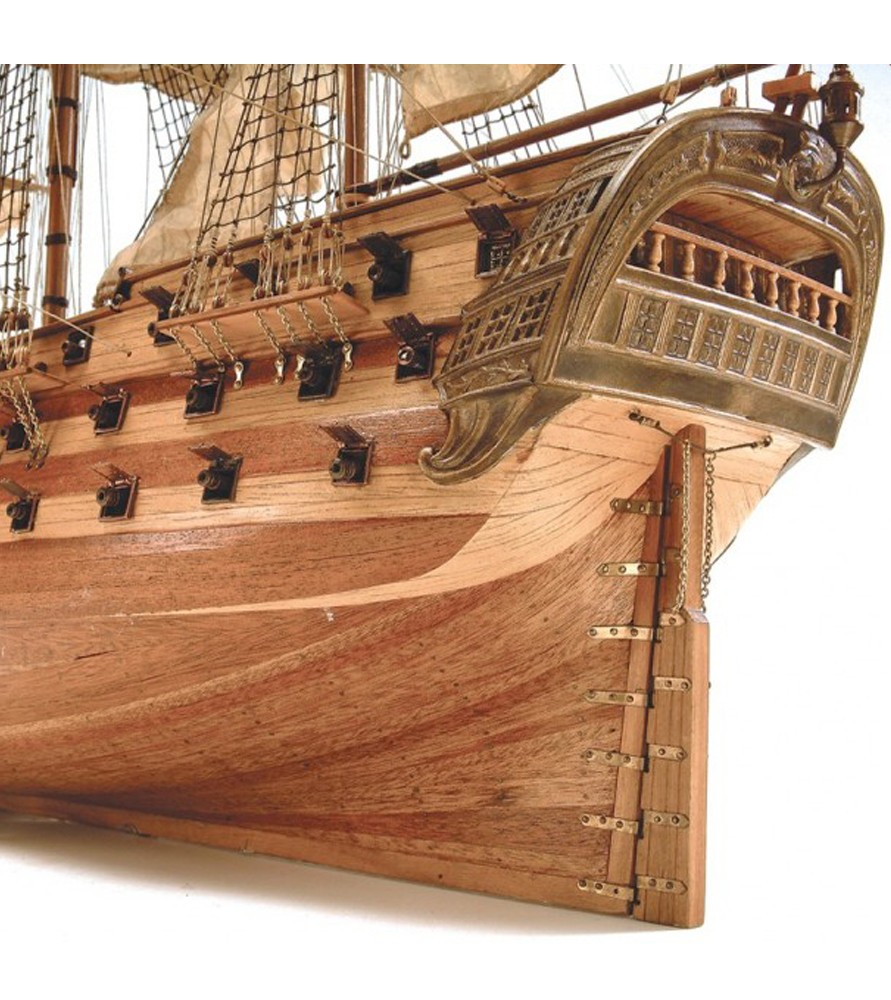
Wooden model ship San Juan Nepomuceno

French Navy: Bucentaure and Villeneuve’s ships

The French ships at Trafalgar numbered 18 vessels under Villeneuve’s command. They were the very embodiment of French naval elegance.

The Bucentaure Trafalgar was Villeneuve’s flagship, an 80-gun ship launched in 1803. At 58 meters long and with a crew of 750, it represented French design: sleek lines, superior speed, and excellent handling. The French built the most refined ships. During the battle, the Bucentaure was severely damaged, losing all its masts before being captured.

Bucentaur technical specifications:

  • Length: 58.00 meters
  • Width: 14.80 meters
  • Displacement: 2,400 tons
  • Armament: 80 cannons
  • Crew: 750 men
  • Speed: 10 knots

The Redoutable, with its 74 guns, is legendary: it was from its mizzenmast that a gunner fired the shot that killed Nelson. The Fougueux, the Indomptable, and the Neptune (all equipped with 74 guns) demonstrated French quality, even if their crews lacked experience. The frigates at Trafalgar played a limited role, focusing on reconnaissance and rescue.

What are the characteristics of ocean liners?

Trafalgar ships of the line were a formidable weapon. They fought in line formation, maximizing their lateral firepower.

They all shared the basic characteristics of Trafalgar ships: three masts with square sails, a wooden hull reinforced with oak, and a copper-covered bottom to protect against marine organisms.

They were classified according to their guns. First class: more than 100 guns on three decks. Second class: 84 to 98 guns on three decks. Third class (the most common): 64 to 80 guns on two decks. Fourth class: 50 to 60 guns, already obsolete by 1805.

The armament consisted of smoothbore cannons firing iron balls. Heavy calibers from 32 to 36 pounds at the bottom, light calibers from 12 to 8 pounds at the top. Plus carronades (short cannons for close combat) and swivel guns against boarding.

The crew: the gunners operated the cannons, the sailors maneuvered the sails, the marines fought, and the carpenters ensured that everything ran smoothly. A 74-cannon ship required 500 to 650 men.

Technical comparison of the fleets participating in the Battle of Trafalgar

At first glance, comparing the size and power of the fleets gives a clear impression. At Trafalgar, the combined fleet seemed to have the upper hand due to its numerical superiority: 33 ships against 27 for the British. But history is rarely summed up in numbers, and in this case, the numbers masked a very different reality.

The British advantage lay in experience. Their crews had been sailing for years. The British fired every three minutes, while the Franco-Spanish fired every five or six minutes. In naval combat, this difference is fatal.

In terms of raw power, the combined fleet had 2,632 guns compared to 2,148 for the British. But the British had better accuracy, better gunpowder, and special projectiles: chain shot to destroy rigging and grape shot to sweep the decks.

In terms of design, the French had the advantage with slimmer, faster hulls. The Spanish built extremely sturdy ships with tropical woods. The British compensated with superior standardization and tactical coordination.

The list of ships at Trafalgar shows that the British concentrated 18 ships with 74 guns: the best balance. The combined fleet had everything from the monstrous Santísima Trinidad to obsolete 64-gun ships. This mix made coordination difficult.

Recreate the Battle of Trafalgar with Artesanía Latina models

For naval model enthusiasts, Artesanía Latina offers models faithful to the history of the main protagonists of Trafalgar. These replicas allow you to relive this epic battle.

The HMS Victory is available in several versions: open on one side so you can appreciate every detail of its anatomy, closed, or perhaps you would prefer to see the interior with this section of the Victory. The 1:84 version is 105 cm long and includes over 1,000 pieces of fine wood, metal cannons, and a complete rigging with sails. Every detail is faithfully reproduced: from the 104 gunports to the golden decorations on the stern where Nelson’s flag flew.
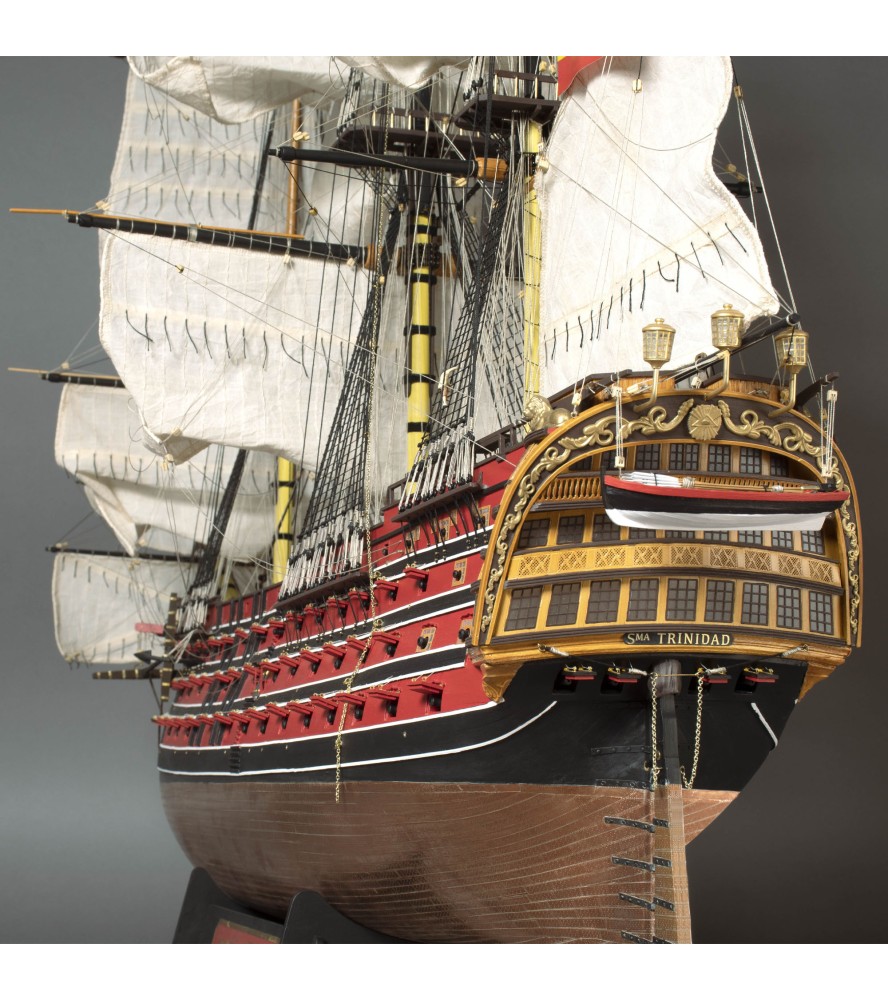
Santisima Trinidad ship of the line – Trafalgar warship – Wooden ship model

The Santísima Trinidad is available in 1:84 scale, reaching an impressive length of 1191 mm and a height of 905 mm. This model captures the unique majesty of this four-deck ship equipped with 140 cannons. It includes detailed plans, high-quality wood, and photo-etched brass fittings for maximum realism.

The San Juan Nepomuceno, a Spanish 74-gun ship that bravely participated in the Battle of Trafalgar, is also available. At a scale of 1:90, this model measures 960 mm and faithfully represents Spanish shipbuilding of the time with its characteristic American woods.

Each kit includes step-by-step instructions in Spanish, historical plans, and all the necessary materials. These projects require between 200 and 400 hours of work, which is perfect for truly understanding how these giants of the seas were built. Assembling these models is the best way to appreciate the complexity and ingenuity of the ships of the line at Trafalgar.

Shipwrecks and survivors of Trafalgar

The outcome of Trafalgar was devastating for the Franco-Spanish fleet. No British ships were lost that day, while the Spanish-French fleet lost twenty-two of its ships. And when the battle ended, the disaster was not over yet: a violent storm finished what the artillery had started.

The Santísima Trinidad, after resisting for hours with legendary tenacity, was finally captured. However, its agony did not end on the battlefield: the next day, it sank, taking with it hundreds of prisoners and those who were attempting to escort it. The Bucentaure suffered a similar fate, captured and deliberately sunk, while the Redoutable was lost after its fierce duel with the Victory.

Some ends were even more brutal. The Achille exploded when fire reached the ammunition hold, killing four hundred of its four hundred and eighty crew members. The Fougueux was wrecked on the coast, and the San Agustín, the Intrepide, and the Argonauta succumbed to the fury of the storm. The human toll was appalling: more than 4,400 French and Spanish dead, compared to 450 British. Today, the remains of this tragedy lie scattered off Cape Trafalgar, silent witnesses to the battle.

The Fougueux was located near Cadiz; the Santísima Trinidad lies at a greater depth, beyond the reach of time and sight. Only one ship has survived the passage of centuries: HMS Victory. Restored to its 1805 condition and preserved in Portsmouth, it allows visitors to walk the same decks from which Nelson led his last battle. A place where history, even today, seems not to have completely disappeared.

FAQ – Frequently Asked Questions

How many ships took part in Trafalgar? 60 ships of the line: 27 British against 33 Franco-Spanish (18 French and 15 Spanish), plus frigates.

What was the largest ship? The Spanish Santísima Trinidad, the only four-decked ship equipped with 130 to 140 guns.

What were the differences between the ships? The French built faster hulls, the Spanish used strong tropical woods, and the British favored rate of fire.

How many guns did each ship have? Between 64 and 140 guns. The Victory had 104, the Santísima Trinidad 140.

Which ships sank? Twenty-two Franco-Spanish ships: Santísima Trinidad, Redoutable, Fougueux, Achille, Bucentaure, Argonauta. No British ships.

Where are the shipwrecks located? On the seabed off Cape Trafalgar and the coast of Cadiz. Some have been located by archaeologists.

Why was HMS Victory famous? Nelson’s flagship and the only survivor of the Battle of Trafalgar, it is preserved as a museum in Portsmouth.

How many crew members did each ship have? Those with 74 guns: 500 to 650 men. Those with 100 guns: 850. The Santísima Trinidad: more than 1,000.

 

Posted in Ship Models

Model Ship Medium Skills (II): Más Kits de Modelismo Naval en Madera con Modelos Históricos para Ensamblar

We continue the breakdown of the catalog from the previous post. Get to know each wonderful medium skills model ship kit that you can build with your own hands. Artesanía Latina exists to fulfill all your modeling desires. Therefore, do not hesitate to also take a look at all the tools and accessories that can be helpfully to you.

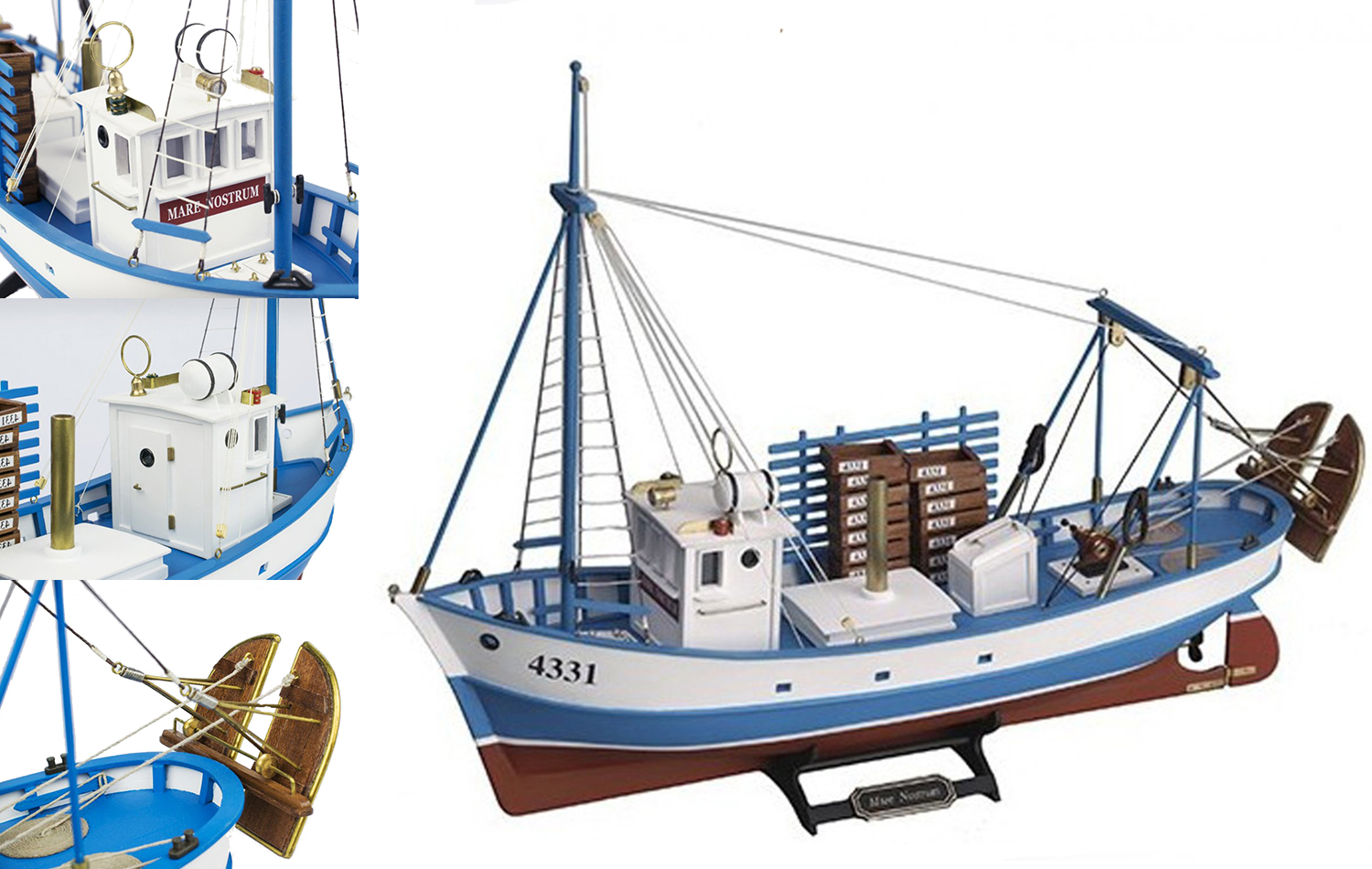
MODEL SHIP MEDIUM SKILLS: WOODEN FISHING BOAT MARE NOSTRUM (20100N)

The Mare Nostrum is a classic fishing boat from the Mediterranean Sea, from Arenys de Mar, Spain. With a length of 15 meters, a beam of 3.5 and a displacement of 10 tons, this boat was powered by a 40HP engine. The Mediterranean trawlers are all similar, presenting small variations depending on their place of origin. It is an intermediate level boat model, but due to its details it will delight anyone who builds it.

The naval modeling kit of the Mare Nostrum contains all the necessary parts to build the model. In addition, it is equipped with boxes for fish, cabins, a detailed engine, a winch for collecting the cable, and at the stern, protruding from the hull, a rigging with pulleys to pass it during towing. As a gift, bring the wooden base for display along with a nominative plaque. Once completed, the model measures 16.14” (410mm) length, 10.62” (270mm) height and 4.13” (105mm) width.

Model Ship Medium Skills. Trawler Mare Nostrum (20100N) by Artesanía Latina.

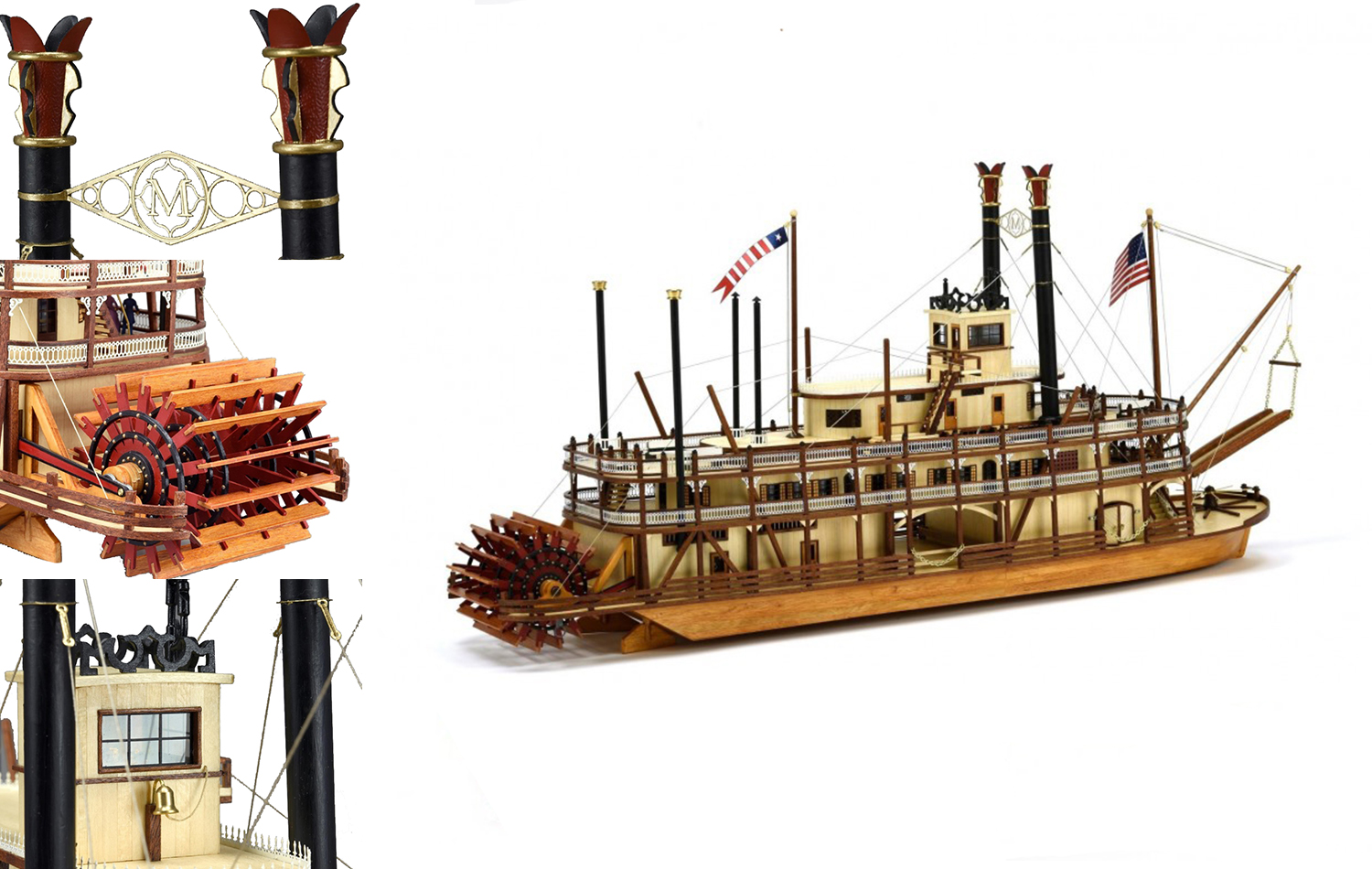
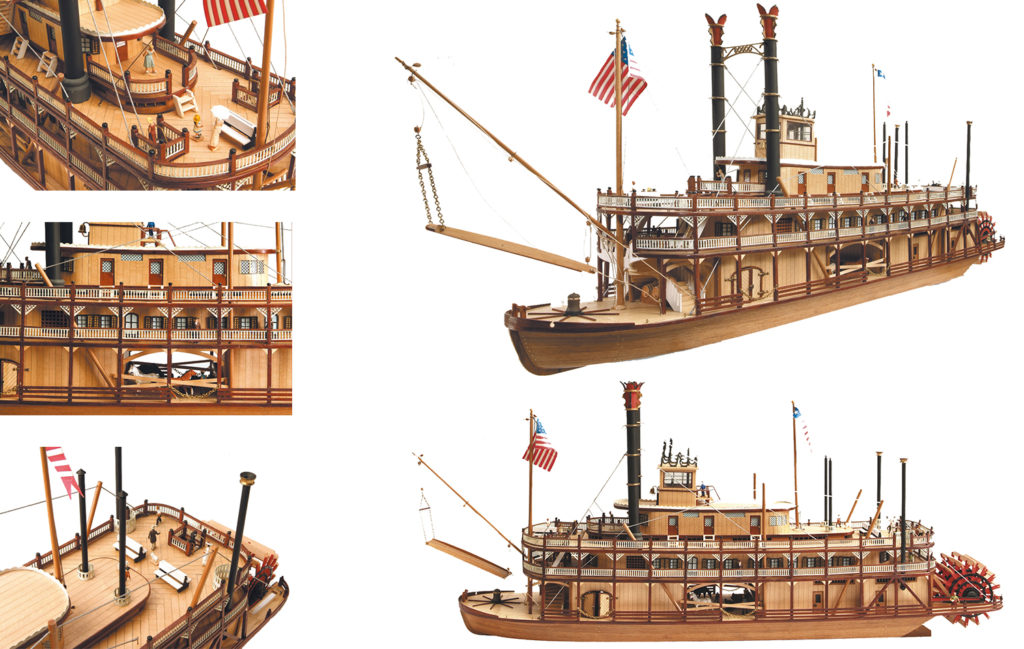
MODEL SHIP MEDIUM SKILLS: WOODEN STEAMBOAT KING OF THE MISSISSIPPI (20515)

Our next model ship for medium skills modelers that we present to you is a steamboat. Built entirely of wood and equipped with boilers to move their iconic propulsion blades, this type of boat was the solution to transporting passengers and merchandise along the river until well into the 20th century. Steamboats played an important role in the development of the Mississippi River basin and its tributaries, allowing convenient transportation in both directions of the river. They helped reduce the immensity of America and as ‘theater ships’ they reduced the loneliness of this immensity. America is not just modernism: it is also romance and dreams!

The naval modeling kit of the King of the Mississippi includes all the necessary parts for its construction: parts of 8 sheets of high-precision laser-cut board, made of hardwoods such as birch and linden; and 2 large photo-etched sheets (294×156 mm and 257×122 mm) including many decoration details never seen before in die-cast and brass. Includes adhesive fabric flags and, as a bonus, the base with name plate.

Now, the model can come to life by purchasing two different sets of effects separately: Lighting Set for Models and DIY Projects (27590) and Motion Motor Set (27591) of the boat blades. Also, to make this faithful miniature replica come to life, you can add a figures set (20515F), sold separately. Once finished, the model measures 25.98” (660 mm) length, 7.55” (192 mm) heigth and 5.11” (130 mm) width.

Model Ship Medium Skills. Steamboat King of the Mississippi (20515) by Artesanía Latina.

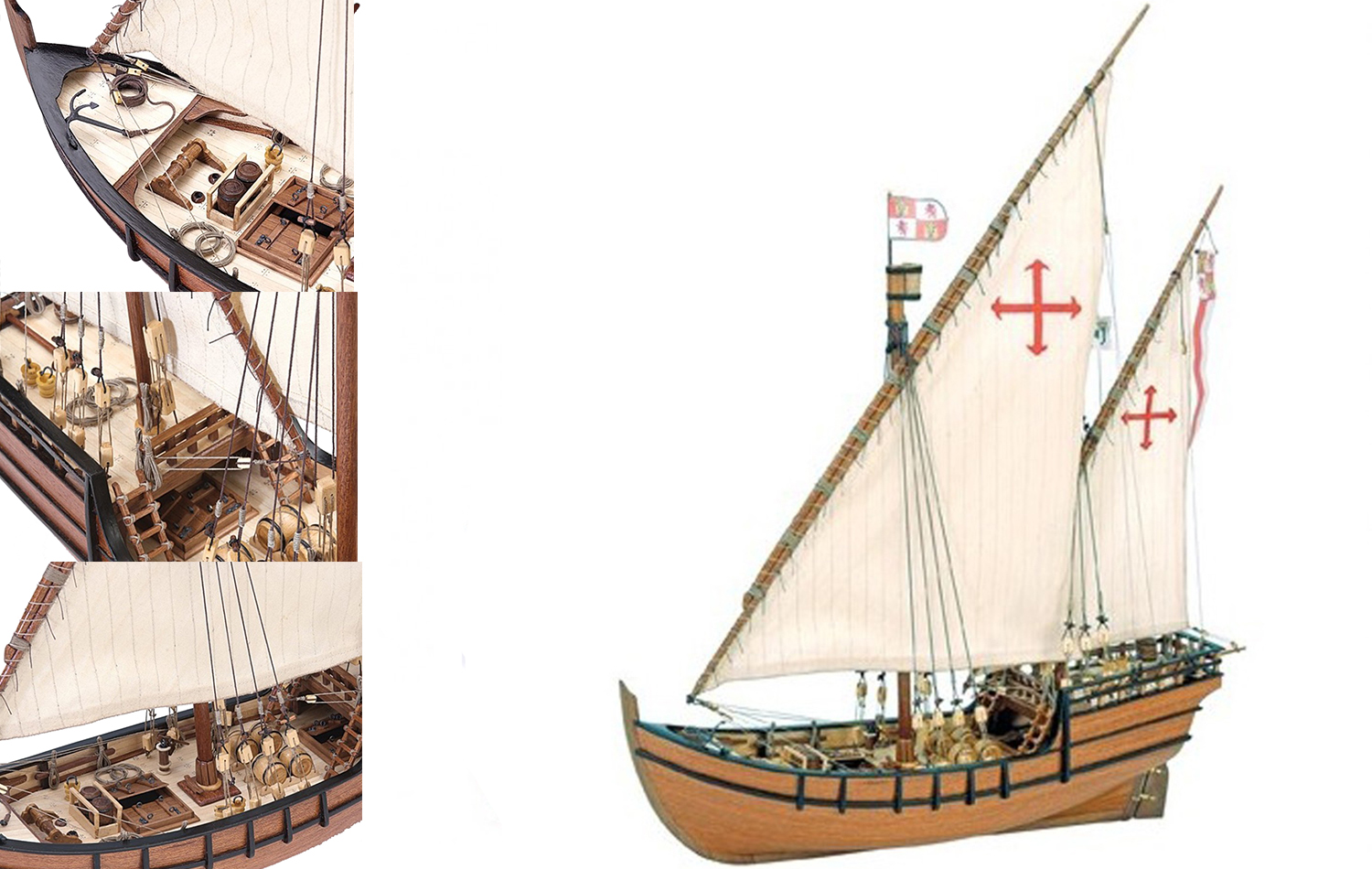
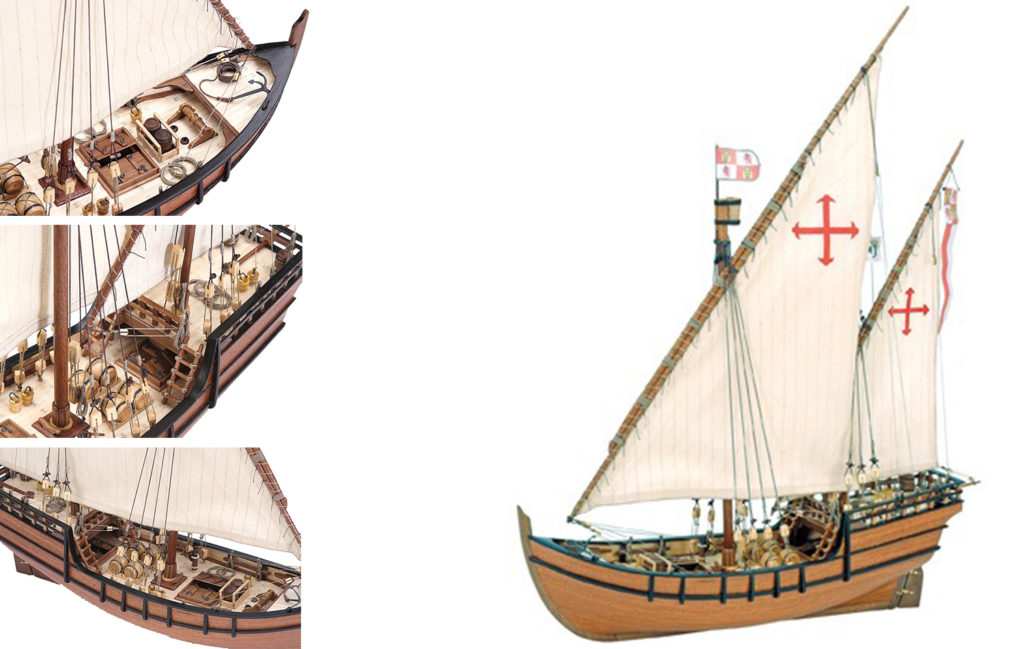
MODEL SHIP MEDIUM SKILLS: WOODEN CARAVEL LA NIÑA (22410)

Our third proposal for a mid-intermediate level boat model is La Niña, one of the three Spanish caravels used by Christopher Columbus on the first trip to the New World in 1492. Built in the shipyards of the Port of Moguer (Huelva, Andalusia) a few years before the trip, it became the captain ship of the expedition after the Santa María ran aground. And now it will delight the most demanding modellers. The expedition left the Port of Palos for the Canary Islands on August 3, 1492. On this scale, the lateen sail that we represent in this model was transformed into square sails. After discovering America, La Niña would return with Christopher Columbus on board, reaching Lisbon on March 4 and finally the port of Palos on March 15, 1493.

Its assembly system using a false keel and frames, like the vast majority of Artesanía Latina’s scale models of boats, brings its design closer to that of the real ship. The modeling kit contains all the necessary parts for its construction: high-precision laser-cut board, birch wood and veneers, various photo-etched brass parts, cast and hand-sewn sails ready to be placed. As a gift, it includes the wooden base for display. After assembly, the model measures 16.33” (415mm) length, 4.37” (111mm width) and 19.48” (495mm) height. On the other hand, it can provide the model of this and the rest of the caravels with more realism even with the Set of 10 Metal Figurines at scale 1 :65 crew members, ready to be assembled and painted, sold separately.

Model Ship Medium Skills. Caravel La Niña (22410) by Artesanía Latina.

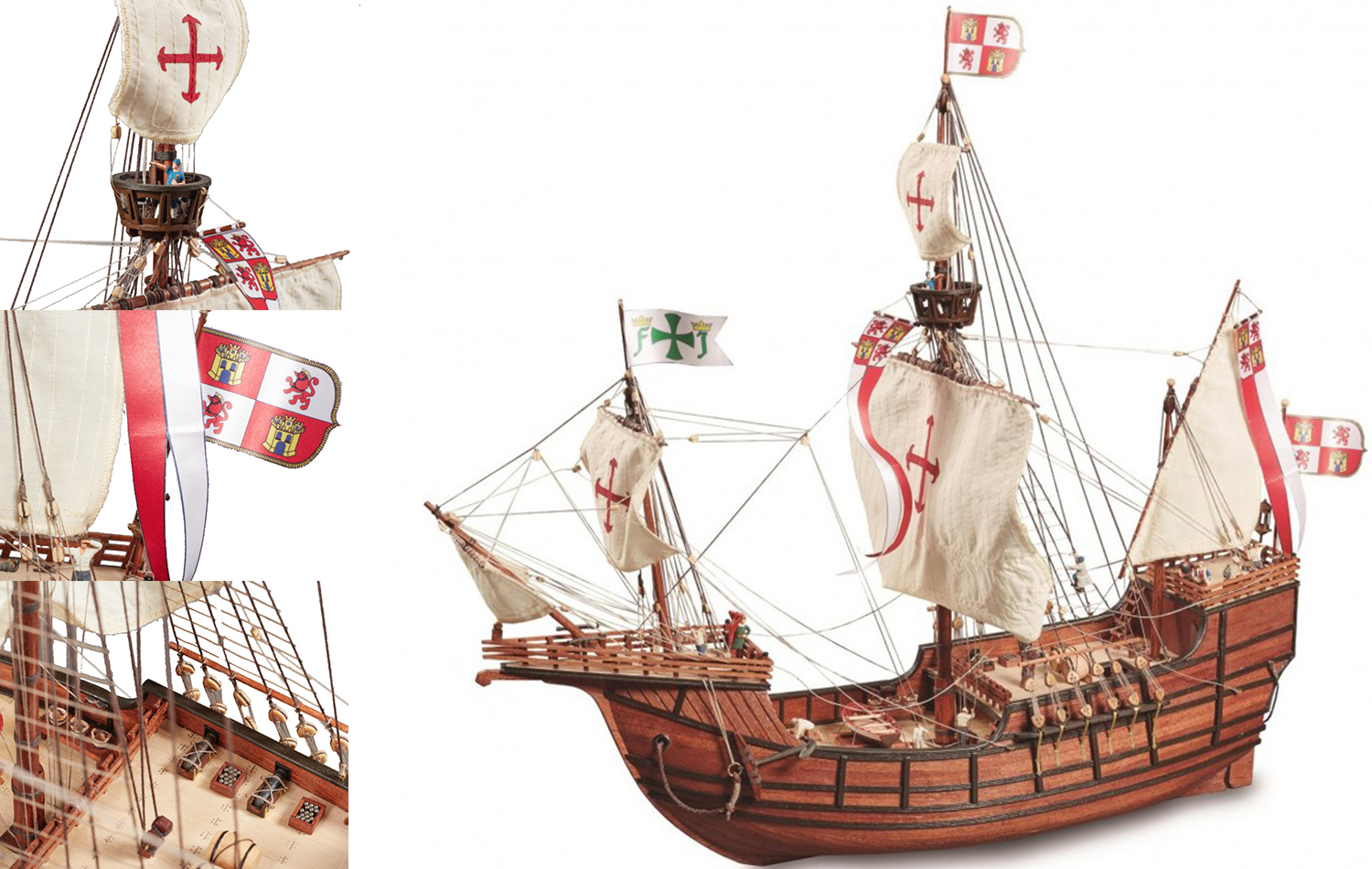
WOODEN CARAVEL MODEL SANTA MARÍA (22411N)

The fourth proposal for a medium skills model ship is possibly the most important in history as it was the one in which Christopher Columbus was traveling when America was discovered at the end of the 15th century, specifically, in 1492. La Nao Santa María, incorrectly called ‘caravel’ because the other two smaller boats that accompanied it were, La Niña and La Pinta – although in the original documents all three were considered caravels – it was originally called La Gallega, whose owner was Juan de la Cosa.

This Santa María Caravel naval modeling kit contains all the necessary parts to build the model, and of the highest quality. High-quality light birch woods cut with precision thanks to the laser; magnificent details made of metal and photo-etched parts; unbeatable and reinforced sails with cotton fabric, ready to be placed – this model includes die-cut cardboard templates to be able to paint its characteristic crosses; and, as a gift so that the model is perfectly displayed, as a work of art that it is, a wooden pedestal with a nominative metal plate. After being built, its measurements are as follows: 19.80” (503mm) length, 10.39” (264mm) width and 19.60” (498mm) height.

Model Ship Medium Skills. Caravel Santa María (22411N) by Artesanía Latina.


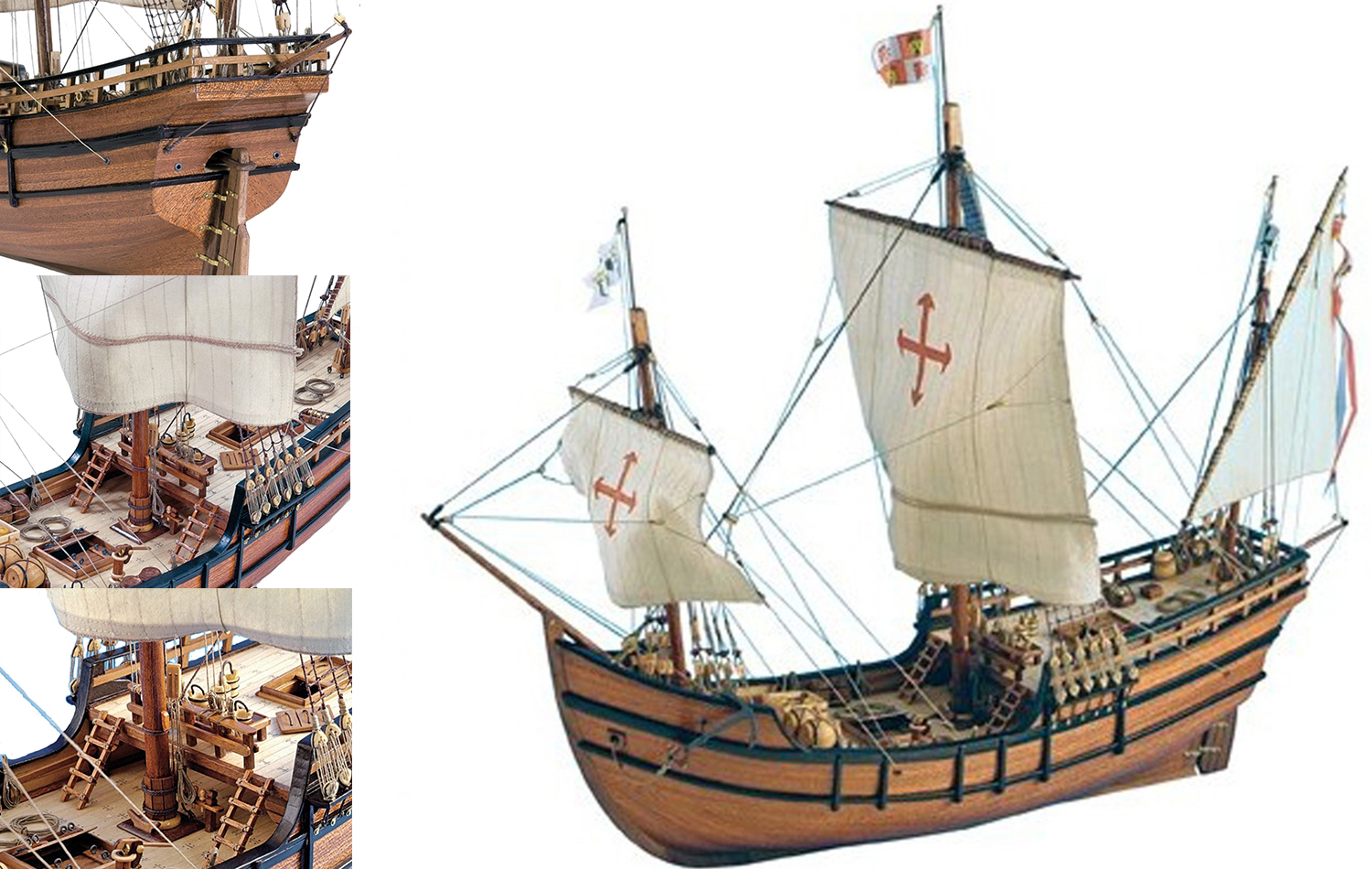
MODEL SHIP MEDIUM SKILLS: WOODEN CARAVEL LA PINTA (22412)

The fifth option of model ship medium skills is the wooden kit of the caravel La Pinta. The fastest of the three caravels used by Christopher Columbus on the first voyage to the New World in 1492. Built in the shipyards of Palos de la Frontera (Huelva) a few years before the trip, it was the fastest of the three boats and often had to wait for the other two. The expedition with the three ships left the Port of Palos for the Canary Islands on August 3, 1492. The sails and rudder of La Pinta were repaired on this stopover, to finally depart for the New World on September 6. It was on October 12 when the famous cry of Rodrigo de Triana “Land in sight!” was heard from the La Pinta ship.

The naval modeling kit contains high-quality parts: high-precision laser-cut board; birch wood and veneer; numerous pieces in wood, metal and brass; pieces in high quality photo-etched brass; sails sewn by hand and prepared to be placed; cotton threads; full scale plan of the boat; and, as a gift, a wooden base to display the model once finished. Once its assembled, this faithful miniature replica measures 20.07” (510mm) length, 9.05” (230mm) width and 15.74” (400mm) height.

Wooden Caravel Model La Pinta (22412) by Artesanía Latina.

MODEL SHIP MEDIUM SKILLS: WOODEN BRIG HMS SUPPLY (22420)

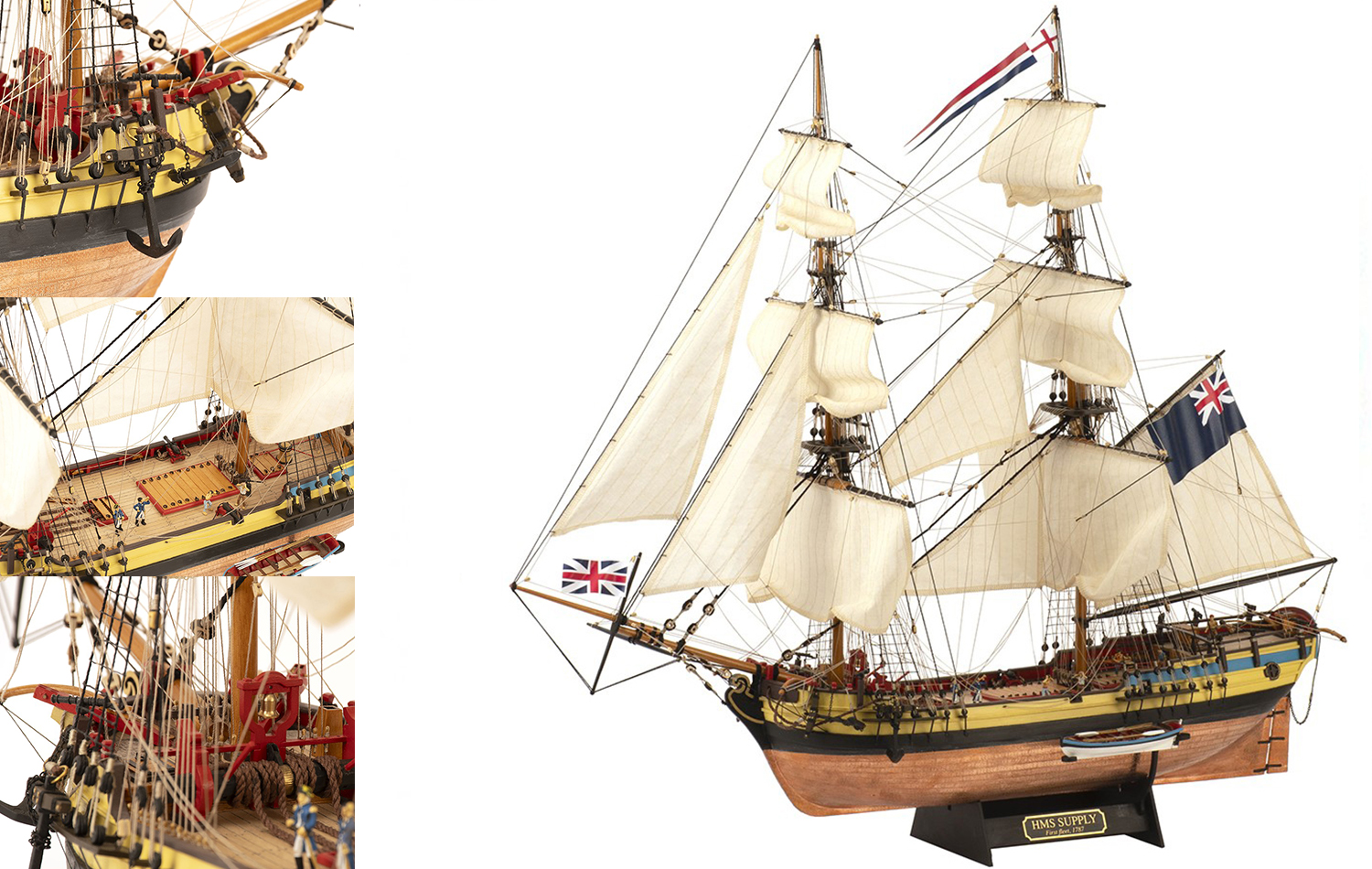
The sixth alternative for those who intend to assemble a medium skills model ship kit is the wooden brig HMS Supply from the 18th century. It was an essential part of the so-called ‘First Fleet’ or First Fleet of the Royal Navy that colonized and founded Australia . HMS Supply was their oldest, smallest and fastest ship. Built in 1759 as a 175-ton armed vessel, she became the colony’s only link to the outside world after the loss of HMS Sirius in 1790. HMS Supply, precisely, was intended to be aship support for HMS Sirius(1786).

The modeling kit of the scale model contains high-quality parts. 6 wooden plates cut by high precision laser, 2 photo-etched plates in brass with numerous details -one of them smaller-, set of birch wood parts -veneers, strips and round rods, oak veneer, fantastic set of 11 sails sewn from cotton ready to be placed, cotton threads for maneuvering in different colors and thicknesses and flags.

Likewise, it includes as a gift bonus a stand with a nominative metal plate, 7 die-cast figures and copper lining for the hull. To work with copper on the boat, we recommend our 5 mm Micro Riveting Tool (27320), for sale separately. Once built, this faithful miniature replica measures 23.11” (587 mm) length, 11.10” (282 mm) width and 26.65” (677 mm) height.

Model Ship Medium Skills. Brig HMS Supply (22420) by Artesanía Latina.

WOODEN MODEL CHINESE JUNK RED DRAGON (18020)

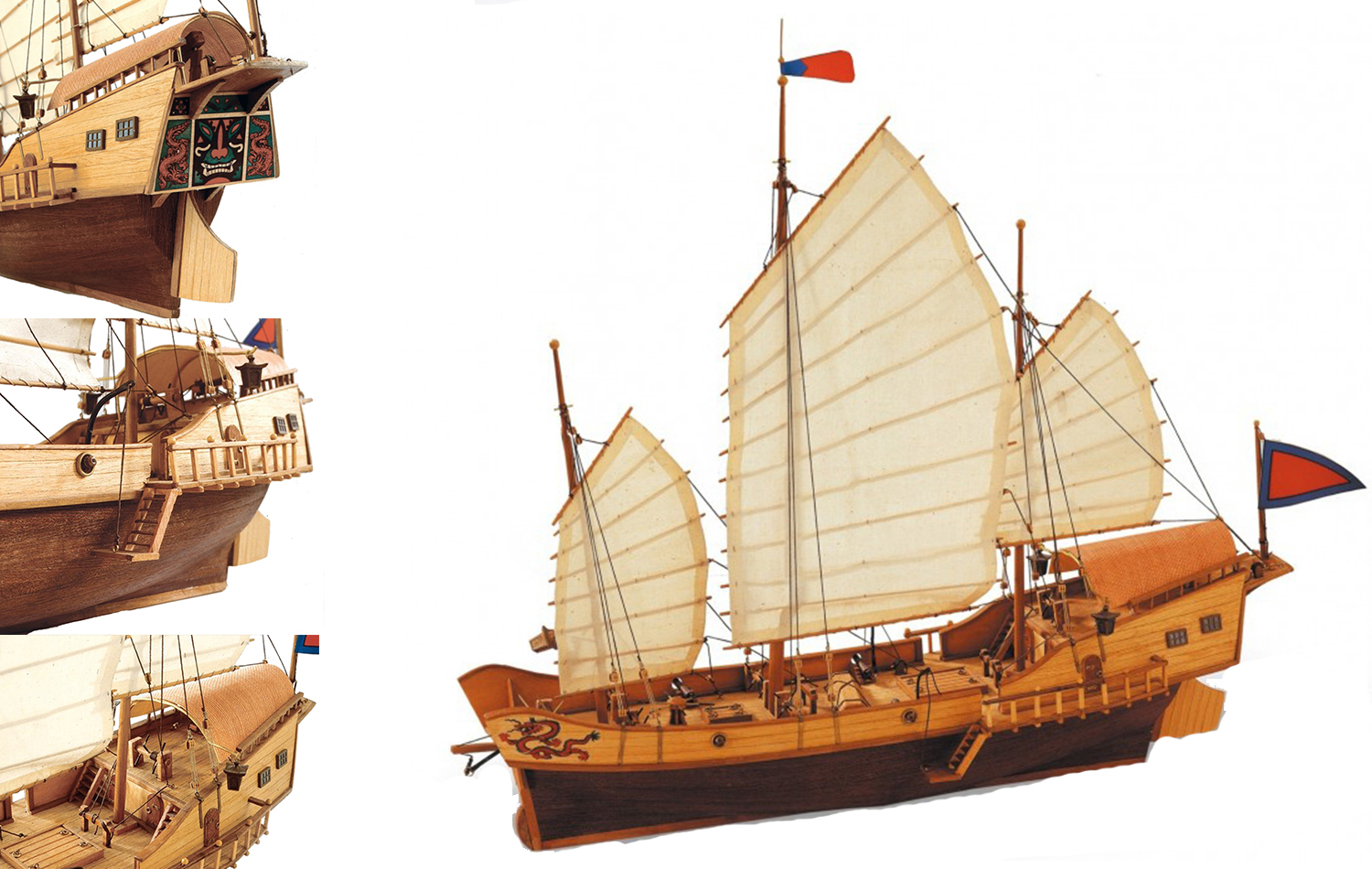
The seventh option for an intermediate level boat model is the Chinese junk Red Dragon. Still in use in many parts of Southeast Asia, these vessels were used for both trade and war. The beautiful reeds, typical of the China Sea, were all the rage among leaders of the time such as Genghis Khan and Kublai Khan, who used them to try to conquer Japan during the 13th century. Appearance of reeds is documented around 600 BC. The hull lacks a keel and has a short stern. Its sails are made of thick fabric reinforced with reeds, which provides it with a lot of stability and thrust. It was one of the most used vessels for piracy on the coasts of Southeast Asia.

The modeling kit contains high-quality parts: high-precision laser-cut board parts, hardwoods, brass, cast iron and fabric. Once built, the model measures 18.89” (480mm) length, 5.11” (130mm) width and 17.32” (440mm) height.

Wooden Chinese Junk Model Red Dragon (18020) by Artesanía Latina.

MODEL SHIP MEDIUM SKILLS: WOODEN GALLEON SAN FRANCISCO II (22452N)

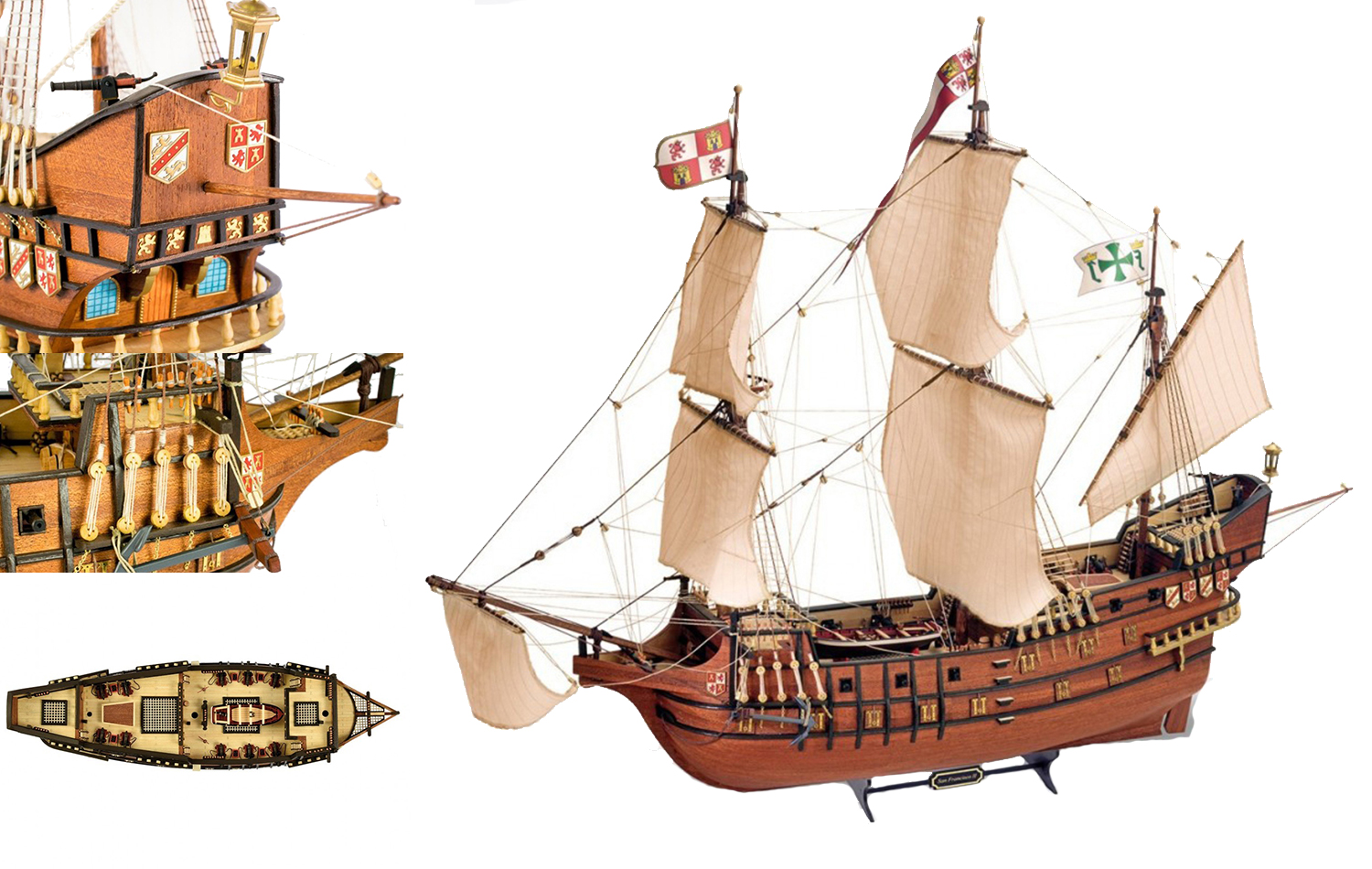
The eighth option is the intermediate level boat model galleon San Francisco II. The galleons were the ships more powerful of their time and backbone of Spanish maritime power during the 16th and 17th centuries. Galleons appeared around the middle of the 20th century. XVI, thus forming the main nucleus of the Invincible Army. For almost 150 years they were the ships par excellence thanks to their combination of great transport capacity and their firepower, which made them ideal for long voyages oceanic routes between Spain and the Indies.

The modeling kit contains more than 1,400 high-quality necessary parts for its construction. It comes with a laser-cut wooden structure, birch strips and sapele veneer, cotton threads, cotton fabric sails and flags ready to be placed, photo-etched decoration in brass to increase realism. And a spectacular free bonus on accessories! It includes a display base for the galleon with a metal nominative plate, and five wonderful figures also in metal to be painted. Once assembled, this faithful miniature replica measures 680 mm length, 240 mm width and 520 mm height.

Model Ship Medium Skills. Galleon San Francisco II (22452N) by Artesanía Latina.

Read the previous post here…

Posted in Ship Models

Expansion of the Ship Models Catalog by Nationalities: Love of Modeling (II)

Tastes of ship models and aircrafts models of the modelers are diverse as they are a very wide spread across all the countries on The Earth. For that reason, Artesania Latina has created a wide range of scale models. Discover here our ship models catalog and aircraft models catalog according to their nationalities, obviously paying more attention to historical potentials, but gradually we are interested in designing and incorporating to our list new miniatures that represent many other countries.

We currently have wooden ship models of Spain, France, United Kingdom, United States, Canada, China, Netherlands, Nordic Countries and Arab Countries. It can be said that Artesania Latina will count with more nationalities for its naval scale models catalog soon.

DISCOVER ARTESANIA LATINA’S EUROPEAN MODEL SHIPS

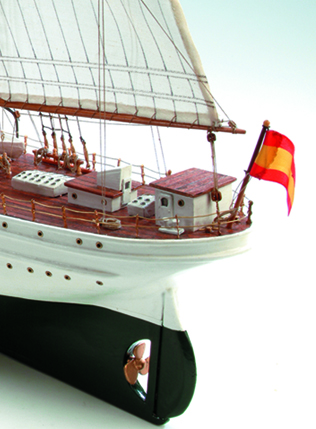
Firstly, from Spain, we offer the following naval scale models: the fishing boats Mare Nostrum and Marina II; La Niña, La Pinta and La Santa María caravels; the San Francisco II galleon model; Santa Ana and the San Juan de Nepomuceno ship.

Ship Models Catalog. Models of historic Spanish ships.

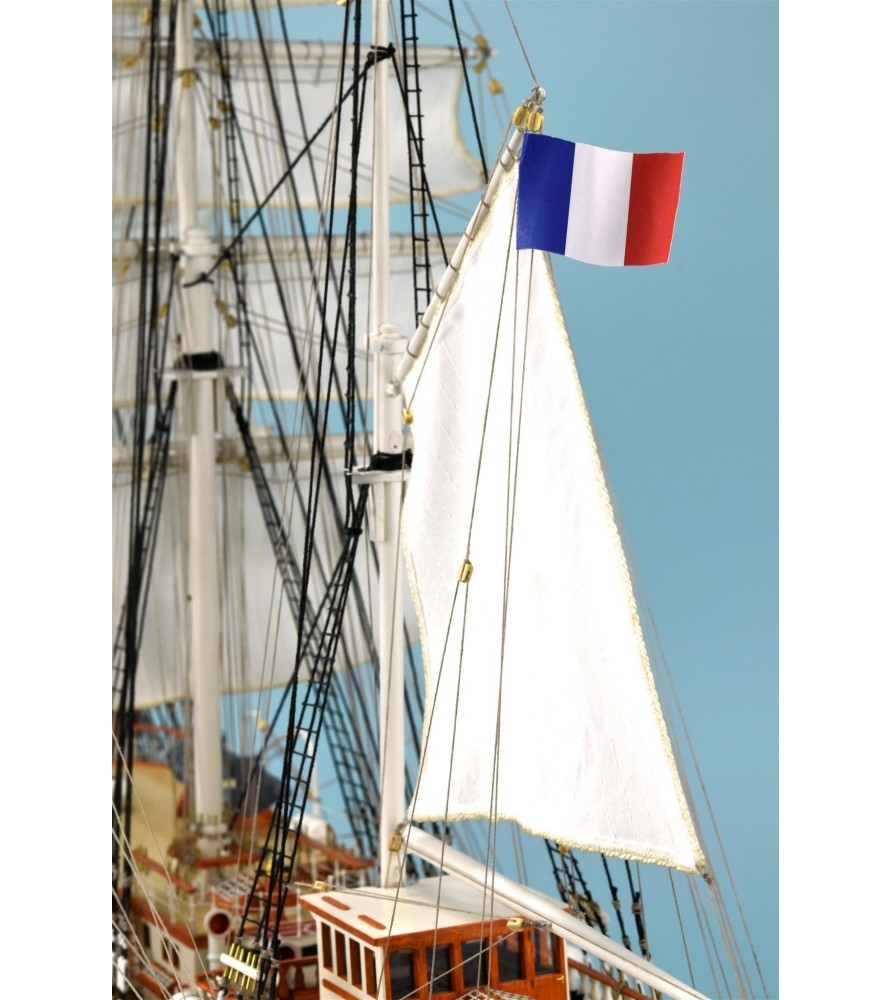
Secondly, from France, the following wooden miniature boats: Saint Malo, La Provençale and Marie Jeanne fishing boats; the Belem school ship; the great Soleil Royal; and the cutters Le Renard et Pen Duick.

Ship Models Catalog. Models of historic French ships.

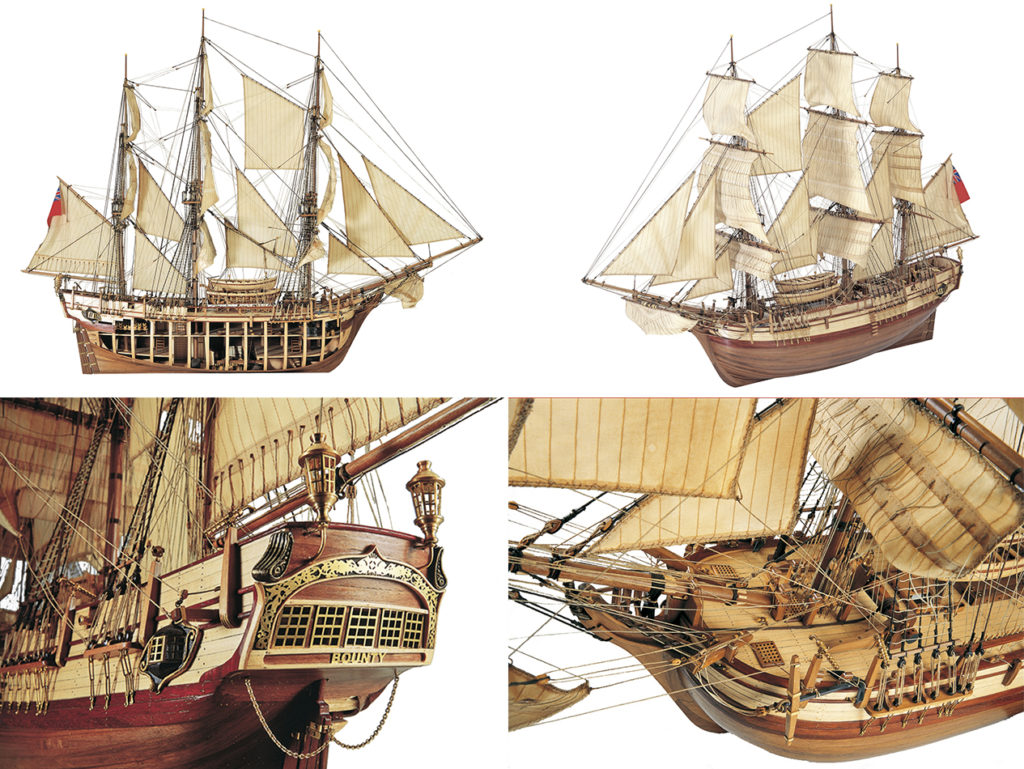
Thirdly, from the UK, these naval replicas: HMS Endeavour and HMS Bounty captain’s boats; Providence whaling ship; and the ships HMS Endeavour, HMS Bounty and Anatomy of HMS Victory, HMS Victory and its Section.

Ship Models Catalog. Models of historic British ships.

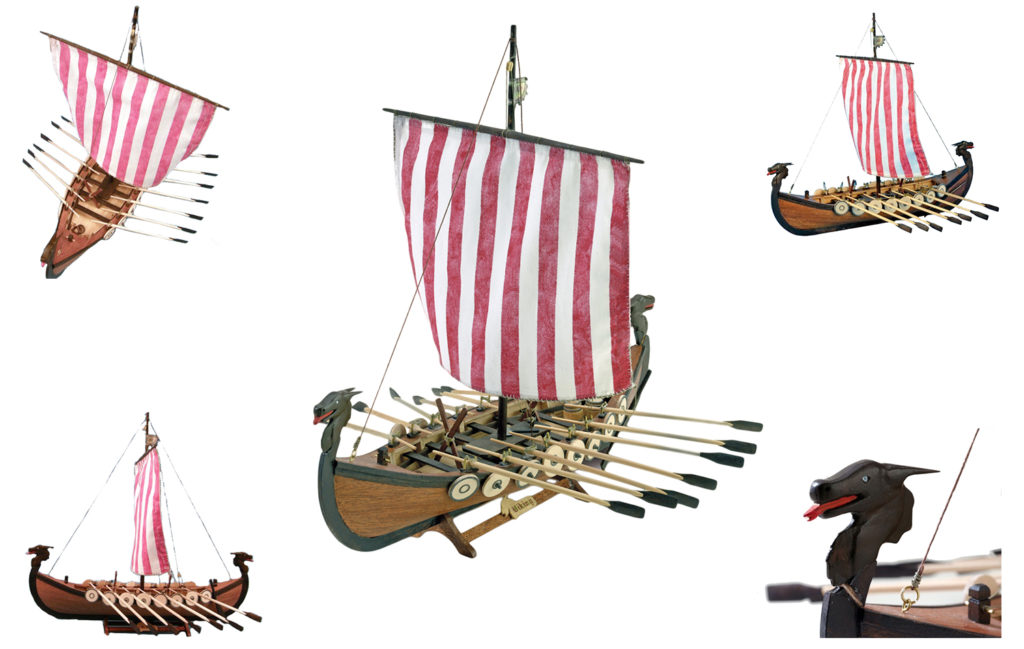
Finally, from the Nordic countries, the traditional Viking ship and the Swedish warship Vasa. From Netherlands, the fishing boat Botter.

Ship Models Catalog. Models of historic Nordic ships.


NORTH AMERICAN SHIP MODELS CATALOG

From the United States and Canada, Virginia American and Bluenose II schooners; Swift pilot boat; and the famous paddle steamer King of the Mississippi. And from the Arab countries, the Sultan dhow.

Ship Models Catalog. Models of historic North American ships.


It is thus proven that Artesania Latina products are designed to reach and entertain all cultures on the planet, regardless of race or nationality. Our ship models and aircraft models have been globalized in the positive sense. We maintain the traditional essence of the modeling, to which the latest technologies have been incorporated and applied in favor of a more optimal assembly and conservation of our environment.

We deliver our models all over the planet.

With the help of our carrier UPS, the best in the sector, we deliver our scale models, our accessories and our modeling tools to all countries of the world, on record time, at a reduced price with safe delivery thanks to reliable and accurate tracking of packages.

To check the estimated delivery time and shipping costs to the different countries, click here.

Join Artesania Latina‘s large and diverse ship modeling and aerial modeling community!


Read the first part of the post…